




Programme
Strengthening the Ideology of Women Farmers (GHANRATI) and the People's Economy through Integrated Cattle Farming
Responsible Organization
Venues
Direct Funding
Period
Start
End
Target
Status
Share to :
STRENGTHENING AGRARIAN REFORM EDUCATION AND INTEGRATED COLLECTIVE ECONOMY OF CATTLE BREEDING FOR THE DAMARA SARASWATI WOMEN'S SANGHA IN BULELENG
The Suka Makmur Farmers Union (SPSM) is located in Pemuteran Village, Gerokgak District, Buleleng Regency, Bali Province, and is predominantly comprised of farmers. The farmers within the group cultivate various agricultural commodities, such as corn, chilies, peanuts, and others. In addition to farming, some also raise livestock, such as cattle. In certain circumstances, these cattle can serve as savings, which can be used in emergencies. However, not all members of the group own cattle.
In addition to the farming community, the Damara Saraswati Women's Sangha, which changed its name from GHANRATI to SPDS, is active in organizations and activities. In addition to being housewives, this group of women also actively participates in important organizational activities, necessitating capacity building in economic, advocacy, and other areas.. At the initial meeting of their activities, they succeeded in forming a Cattle Management Team.
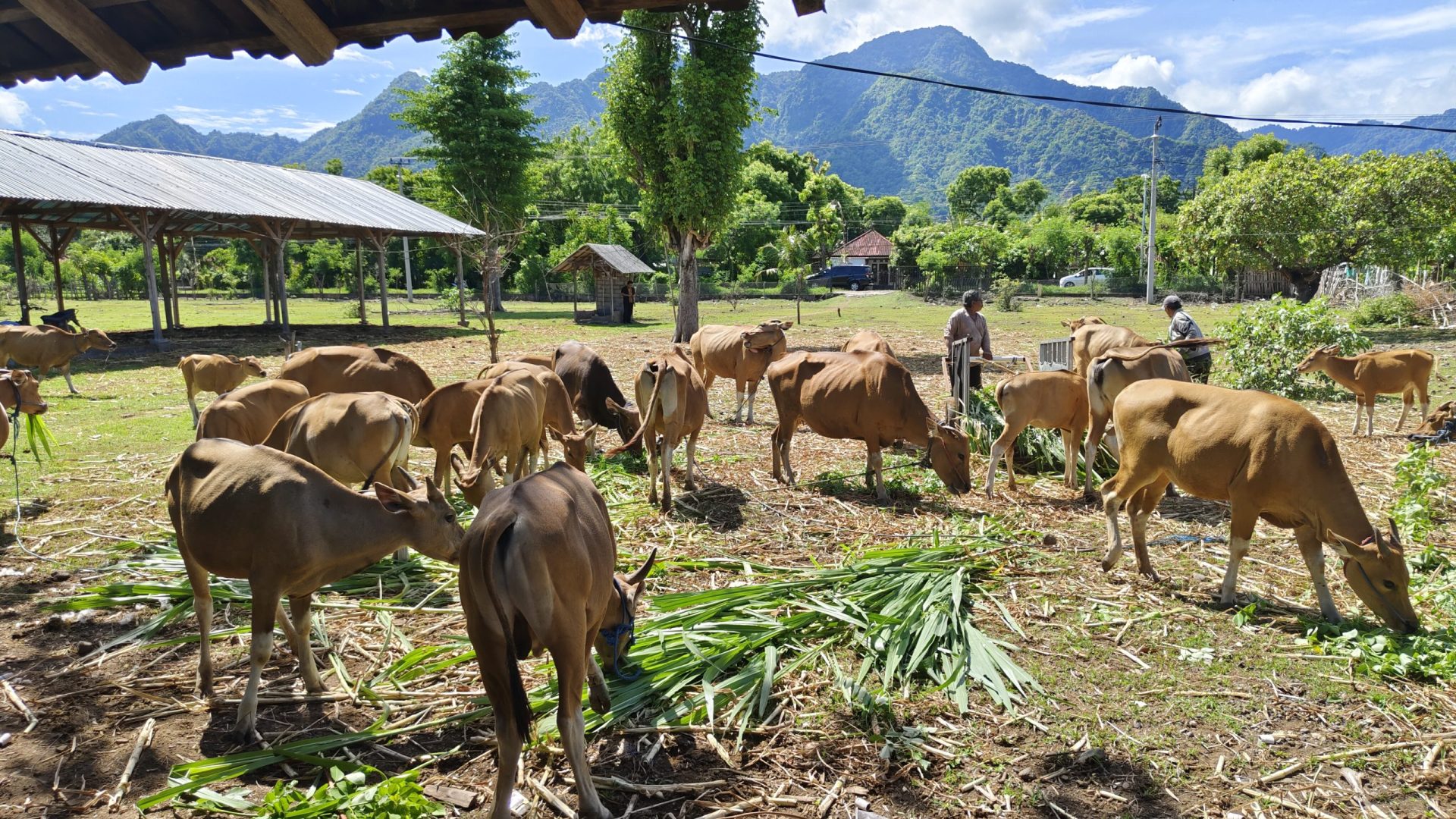
With direct funding support, SPDS built a cattle barn, provided cattle farming training to 31 members of the Pemuteran community, and also trained them in making alternative animal feed. Fifty SPDS members also participated in genuine agrarian reform education linked to the principles of economic development, particularly integrated cattle management. This initiative also resulted in the processing of cattle waste into organic fertilizer. The changes felt by the nine members who received the first phase of cattle farming were helpful, as initially, the members raised cattle using a subsistence system. bowling pin (profit sharing) with other parties with a distribution system, namely the livestock owner gets 50% and the breeder 50% after deducting capital. The SPDS initiative in terms of profit sharing, the breeder receives 70% and the manager 30% of the sales proceeds minus capital, after which members may reapply for phase 2 business capital.
The SPDS initiative is a form of revolving capital from collectively set aside funds. Collective cattle farming development can boost the organization's collective economy, encouraging the restructuring of production practices through the development of the Advanced Agrarian Reform Village (DAMARA) program for the Pemuteran community. The main challenges faced are aligned with Target 4, which promotes the realization of equitable and sustainable production, distribution, and consumption models, in accordance with the principles of mutual cooperation and self-reliance established at the farmer union level.